Basic Pasta Rule
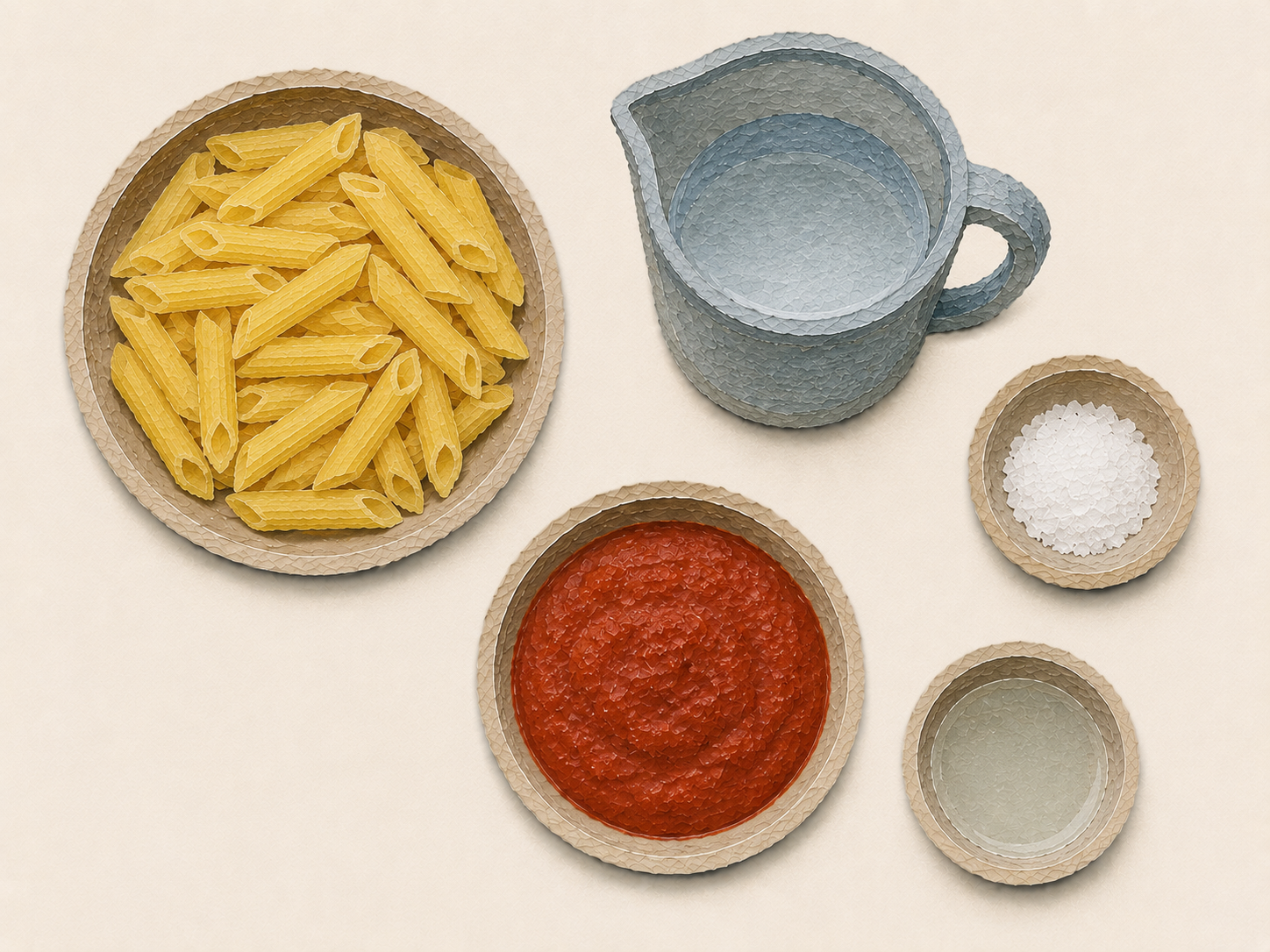
A good pasta dinner starts before the sauce. Plenty of water, enough salt, the right doneness, and finishing the pasta in the sauce are what make it feel complete instead of flat or slippery.
Ingredients
- 450 g dried pasta 4 quarts water 1 1/2 to 2 tbsp kosher salt sauce, ready to finish the pasta reserved pasta water, as needed
Instructions
- 1Bring a large pot of water to a full boil. Salt the water just before adding the pasta. Add the pasta and stir well for the first minute. Cook until just shy of al dente , checking by tasting instead of relying only on the box. Reserve at least 240 ml pasta water before draining. Move the pasta straight into the sauce or into a pan where the sauce is waiting. Add a splash of pasta water and toss until the sauce turns glossy and coats the pasta. Serve at once.
This is the method behind better weeknight pasta, whether the sauce is creamy, tomato-based, garlicky, buttery, brothy, or built from pantry scraps.
Best served with: tomato sauce, creamy skillet sauce, garlic butter, roasted vegetables, sautéed mushrooms, meatballs, chicken, seafood, herbs, grated cheese, or a simple pan sauce.
Cook’s Note: Taste the pasta before the package time is up. If it will finish in sauce, pull it while it still has a little firmness so it does not overcook in the pan. Save pasta water before draining; the starch helps loosen, bind, and gloss the sauce.
Why This Rule Works
Good pasta starts before the sauce. Enough water gives the pasta room to move, salt seasons it from the inside, and early stirring helps keep the pieces from sticking together. Cooking just shy of done gives you room to finish the pasta in the sauce without making it soft.
Pasta water is the quiet part that makes the whole plate work. A splash of it helps sauce cling instead of sliding off or pooling at the bottom of the bowl. The goal is not wet pasta with sauce on top; the goal is pasta and sauce that finish together.
How to Use This Rule
Use this method anytime you are cooking dried pasta for a sauced dish. Bring the water to a full boil, salt it well, add the pasta, and stir right away. Start tasting before the package time says it should be done.
If the pasta will finish in sauce, drain it when it is just shy of your ideal texture. Move it into the sauce with a splash of pasta water and toss until the sauce looks glossy and coats the pasta. Add more pasta water only as needed.
If the pasta will be served plain, baked, or mixed into something cold, adjust the timing. Cook it a little further for plain buttered pasta, pull it earlier for baked pasta, and rinse only when you are making a cold pasta salad or another dish where loose starch would make it gummy.
How to Know Pasta Is Ready
Taste is the best test. Pasta should feel firm and springy, not hard, chalky, soft, or limp. If there is a dry white center, it needs more time. If it bends and collapses without any structure, it has gone too far.
For sauced pasta, stop slightly early. The pasta should still have enough bite to handle another minute or two in the pan with sauce and pasta water.
Make It Yours
Choose the shape based on the sauce. Long strands work well with smooth, glossy sauces, garlic oil, butter sauces, and lighter tomato sauces. Short shapes are better for chunky sauces, creamy sauces, vegetables, beans, sausage, mushrooms, or anything that needs pockets and ridges.
Adjust the finish based on the sauce. Creamy sauces usually need a splash of pasta water to loosen them. Tomato sauces need enough tossing time for the pasta to absorb flavor. Butter or oil-based sauces need steady tossing so the fat and starchy water come together instead of separating.
A few easy directions:
- Spaghetti or linguine with garlic, olive oil, herbs, and a splash of pasta water.
- Rigatoni or penne with tomato sauce, sausage, mushrooms, or roasted vegetables.
- Egg noodles with creamy skillet sauce, mushrooms, chicken, or meatballs.
- Small pasta shapes with beans, brothy sauces, vegetables, or leftovers.
Common Mistakes
- Not salting the water enough.
- Adding pasta before the water is fully boiling.
- Forgetting to stir in the first minute.
- Relying only on the package time.
- Draining without saving pasta water.
- Rinsing pasta when it needs to hold sauce.
- Letting cooked pasta sit too long before saucing.
- Finishing pasta fully in the pot, then overcooking it in the sauce.
Pairing Suggestion
Pair pasta with something crisp, bitter, acidic, or cold so the plate does not feel too soft. A green salad, cucumber salad, quick pickles, sparkling water with lemon, iced tea, or a dry glass of wine can balance a rich or creamy pasta dinner.
Leftover Strategy
Store leftover pasta in an airtight container in the refrigerator and use it within 3 to 5 days. Reheat it gently with a splash of water, broth, milk, or sauce, depending on the dish. Dry reheating makes pasta stiff, so add moisture before warming.
For plain leftover pasta, turn it into a quick skillet meal with butter, garlic, vegetables, eggs, cheese, or a spoonful of sauce. For sauced pasta, reheat slowly and loosen only as much as needed so the sauce comes back together.
Kitchen Connections
Method: Dinner Spice Methods.
Next Dish: Garlicky Broccoli Pasta.