Method
Basic Soup Base Rule
Prep
15 minutes
Cook
45 minutes
Serves
0 servings
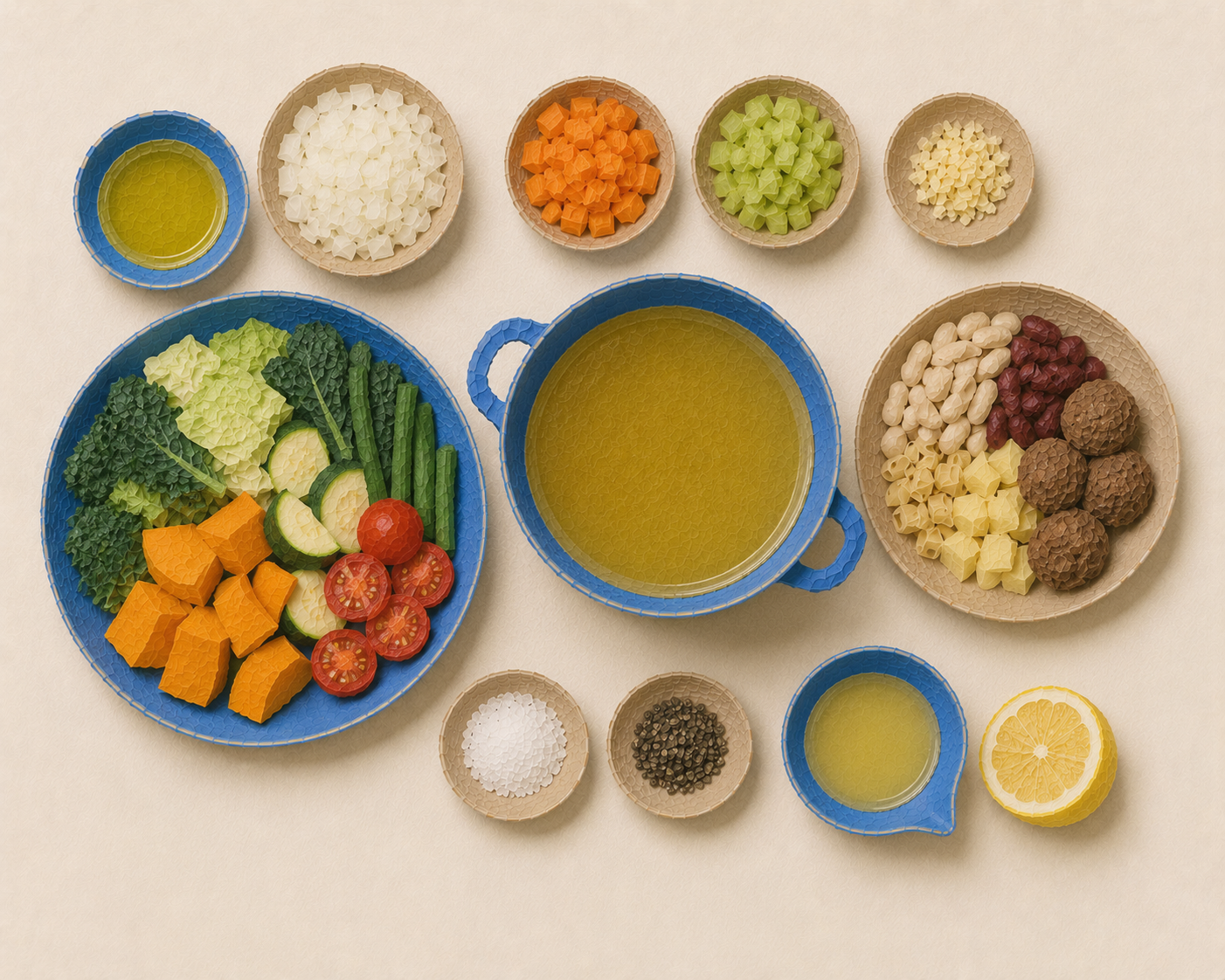
The basic soup base rule is a flexible method for turning aromatics, vegetables, liquid, and a few well-timed add-ins into a soup that tastes balanced instead of random. Start by softening the aromatics, add the ingredients that need time, simmer gently, then finish with salt, herbs, fat, dairy, or brightness until the pot tastes full. This is not one fixed soup recipe. It is the method behind brothy vegetable soups, grain soups, bean soups, meatball soups, and simple creamy soups when you want the ingredients to feel connected instead of floating in seasoned water.
Ingredients
- 2 tablespoons olive oil or butter
- 1 medium onion, chopped
- 1 carrot, chopped
- 1 celery stalk, chopped
- 1 to 2 garlic cloves, minced
- 4 to 6 cups sturdy vegetables, chopped
- 6 to 8 cups broth, stock, or water
- 1 to 2 cups beans, grains, potatoes, pasta, meatballs, or cooked protein, optional
- 1 teaspoon kosher salt, plus more to taste
- Black pepper, to taste
- Lemon juice, vinegar, herbs, cream, yogurt, or olive oil, for finishing
Instructions
- 1Heat the oil or butter in a soup pot over medium heat.
- 2Cook the onion, carrot, celery, and garlic until softened and fragrant.
- 3Add the sturdy vegetables and season with salt and pepper.
- 4Add the broth, stock, or water and bring to a gentle simmer.
- 5Add long-cooking ingredients early and simmer until tender.
- 6Add quick-cooking ingredients near the end.
- 7Taste and finish with more salt, pepper, herbs, acid, dairy, or olive oil.
Best Served With
crusty bread, toast, savory pancakes, simple sandwiches, or a small salad.
Cook's Note
Add ingredients by timing, not all at once. Barley, lentils, rice, potatoes, meatballs, and raw proteins need a longer simmer. Pasta, cooked proteins, tender greens, dairy, fresh herbs, and sharp ingredients usually belong closer to the end.
Why This Recipe Works
Soup tastes better when each layer has time to do its job. Aromatics create the first savory base, sturdy vegetables give the pot body, and liquid carries the flavor through everything else. The timing keeps grains, starches, proteins, and tender ingredients from turning mushy before the soup is ready. The finish is what keeps a simple soup from tasting flat. Salt sharpens the base, fat rounds it out, herbs make it fresher, and a little lemon, vinegar, brine, cream, or yogurt can bring the whole pot into balance.
Make It Yours
Use oil for a lighter soup or butter for a rounder base. Swap onion for leek, shallot, garlic, ginger, or celery depending on the direction of the soup. Use broth for depth or water for a cleaner, lighter pot. Add beans, grains, potatoes, meatballs, pasta, or cooked protein when you want the soup to feel more like a meal. Finish with lemon, vinegar, herbs, cream, yogurt, chili oil, pickle brine, or olive oil. The goal is not to make every soup taste the same; it is to give each pot enough body, brightness, and balance. Common Mistakes Adding everything at once. Boiling hard instead of simmering gently. Adding pasta too early. Adding dairy over high heat. Adding acidic ingredients before potatoes, beans, or grains soften. Waiting until the very end to season the whole pot. Using water without adding enough aromatics, salt, fat, herbs, or brightness.